MODEL RAILROAD SWITCH CONTROL
Our growing line of switch control products enable customers to elegantly control switch points via numerous switch machines available on the market. While most switch machines can be controlled easily by toggle switch or pushbutton, our products provide modelers the opportunity of using our attractive fascia-mounted Switch Control Panel (SCP), interfacing to our Digital Bungalow Module (DBM) signal controller (via the WCZM switch I/O interface card), or both.
All of our switch control products utilize a two-wire Switch I/O which allows the use of standardized controls regardless of switch motor types:
The Z Request line allows a simple pushbutton to be employed to initiate switch movement. The C position feedback line provides realistic feedback to indication panels and a signal system while a slow-motion switch machine is throwing. It also enables the ability to prototypically model 'dual-control' switch machines which do not provide a valid position to the signal system when the machine is operated by hand.
All switch controllers are capable of pairing with a second switch controller in a master/slave configuration for applications where two machines need to work together such as crossovers, single-slips & switches that have movable-point frogs. Only one switch control interface (SCP and/or WCZM interface) is required to control both switches. Additionally, master and slave do not need to be the same type of switch machine.
Each switch controller has a standard 5-pin terminal block for power, control interface and master/slave connections.
Each Type of switch controller is equipped with unique connections tailored to the type of switch machine to be controlled.
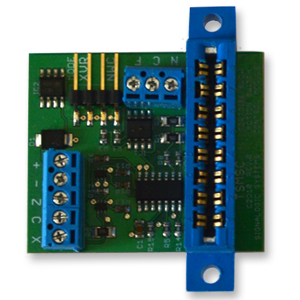
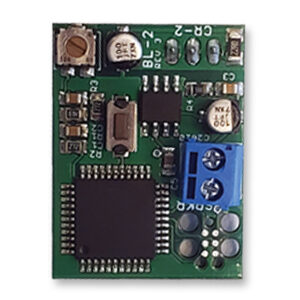
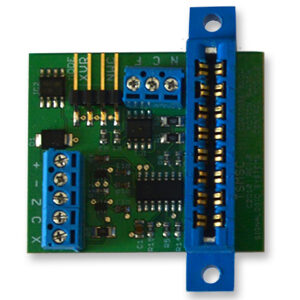
The TSMSC is designed specifically for Circuitron's Tortoise switch machine. Equipped with a board-edge connector, the TSMSC plugs directly onto the printed-circuit connector of the stall-type switch machine.
Switch position is determined at power-up by one of the built-in contacts of the Tortoise. The Tortoise will be held in the detected position until requested to throw via the Z terminal. If the internal contacts are worn and do not indicate either position at power-up, the TSMSC will drive the Tortoise to the Normal position.
The TSMSC provides user access to the second built-in Tortoise contact set via a terminal block for applications such as frog power routing.
The TSMSC will only indicate that the switch machine has achieved the requested position after the motor has been confirmed to be stalled at the end-position. While in transition, the C output is open-circuited. This third state provides a prototypical response to automatic signals which are seen to display all red while the switch is throwing, and on dispatcher panels, where the switch position correspondence is shown out-of-correspondence for the duration of the switch throw.
If the TSMSC indicates Normal via the C terminal when the switch is actually Reverved, users can either rotate and plug the TSMSC 180 degrees from the original position or apply the supplied shunt-jumper across the 'NWC' pins to force the TSMSC to consider the opposite position to be considered Normal.
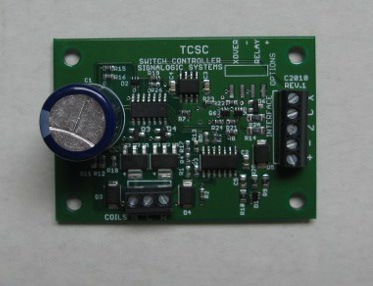
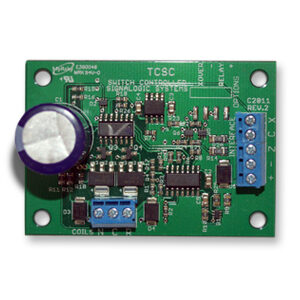
The TCSC is a capacitor-discharge type switch controller, capable of operating switch machines made of two solenoid-type coils. Typical models include Atlas and PECO solenoid switch machines.
The TCSC is equipped with a built-in voltage-doubling circuit which will charge the on-board capacitor to a maximum voltage of 25VDC for rapid discharge into the switch-machine coils. The voltage doubling circuit ensures sufficient energy to overcome over-center spring forces typically found in PECO type turnouts.
Switch position feedback is achieved by a clever circuit incorporated into the solenoid output connectors of the TCSC. By exploiting the electrical characteristics of the solenoid coils, the TCSC senses which solenoid coil currently contains the steel throw rod and thus the position of the switch points. This feature provides the beneficial capability of detecting changes in the switch points due to manual operation of the switch machine, without the need for any external switch contacts!
The TCSC also provides an output to directly drive an external relay for purposes such as frog power routing.
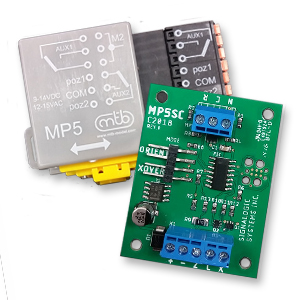
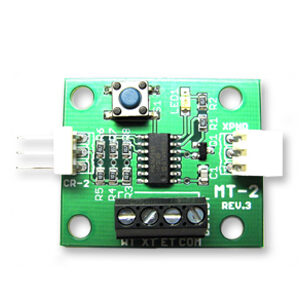
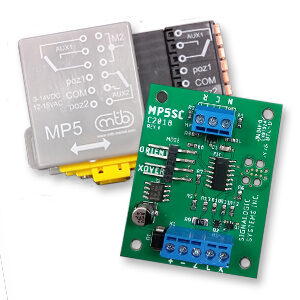
MTB line of switch machines include the MP5, MP1, & MP4 (replacing the MP5). Our MP5SC was named for the MP5 switch machines but will work with the MP1, MP4, or MP5 models.
The MP5SC provides a three-wire output to the MPx switch machines to drive the machine via the 'three-wire' interface. Switch machine position is persistently determined from the differences in electrical impedance of the two motor operating inputs conditions, leaving all of the MPx external contacts available for other applications.
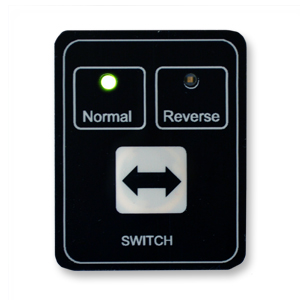
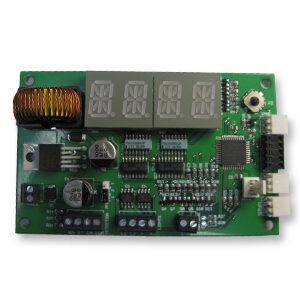
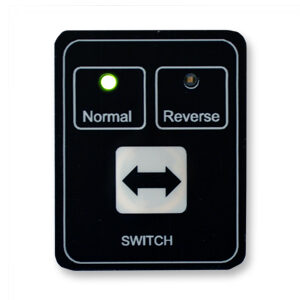
The SCP is an elegant fascia-mountable control panel. The panel is flat, employing a dome-type pushbutton which is highly immune to accidental activations by operators brushing by the fascia.
The SCP provides separate LEDs to indicate Normal (Green) and Reverse (Yellow) positions. If the connected switch controller does not detect the switch in a valid position or the C line is opened between the switch controller and SCP, both LEDs will light at half-intensity.
An integrated jumper is provided in the rear of the SCP to select whether the pushbutton will connect to the +ve or -ve power source when depressed. The default position is for the pushbutton to connect to -ve (common ground). Systems such as the Digitrax DS64 can use the SCP with the jumper moved to the +ve position.
A four position connector matches the connections of all switch controllers, with the exception of the X Slave Connection pin. A 3/4" hole in the fascia is required to house the connector and connecting wiring. The SCP may be secured to the fascia with adhesives such has 'hot glue' or double-sided tape. Alternatively, starter-holes are drilled in the SCP if the user desirers to secure the SCP with screws. The user simply drills out the starter hole to accommodate the screws.
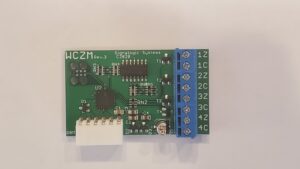
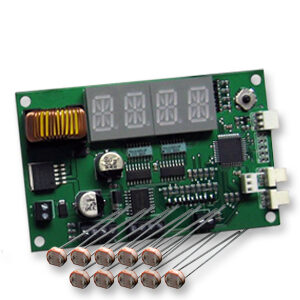
The WCZM is a standard Digital Bungalow Module (DBM) signal controller I/O module designed to interface with up to four external switch controllers. The DBM controller power supply must be either the same power supply used with the switch controller or share an electrical common.
The DBM signal controller will sense and operate the switch machines based on different possible configurations, including: power-switch control, hand-throw (feedback only) and electric lock (release-enable) implementations. The DBM configurations are entered via our Signal Suite configuration software.
The TWM is a standard Digital Bungalow Module (DBM) signal controller I/O module designed to drive up to four Tortoise switch machines directly without the need for TSMSC external controllers.
The TWM offers a simple alternative to users who do not require fascia control via a TSMSC/SCP pair. Users may still gain fascia control utilizing the DBM's Local Control Panel (LCP) functionality where users can implement local user controls via the DBM, ensuring the signal system remains in control of whether a switch is considered safe to throw.
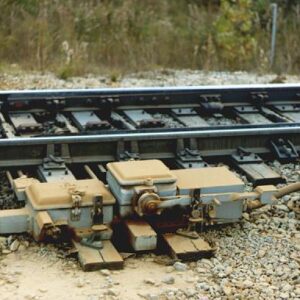
When we are talking about switch control we have two major categories from prototype railroading:
In neither case does the train crew have ability to throw switch points directly from the train. In the case of interlockings, conditions must be safe to allow the switch to throw, based on statuses the interlocking can detect and the assumptions that operating rules are being followed. In the case of hand-throw switches, a crew member must physically be on the ground to operate the switch and observe that conditions are safe to throw the switch.
Yes, there is a modern exception to this rule where a crew can request a power switch to throw via radio DTMF key presses, but that too is an example of linking to an interlocking which decides whether the request to throw the switch can be granted.